
Need assistance? We're here to help with support, guidance, and resources. Reach out to us anytime.
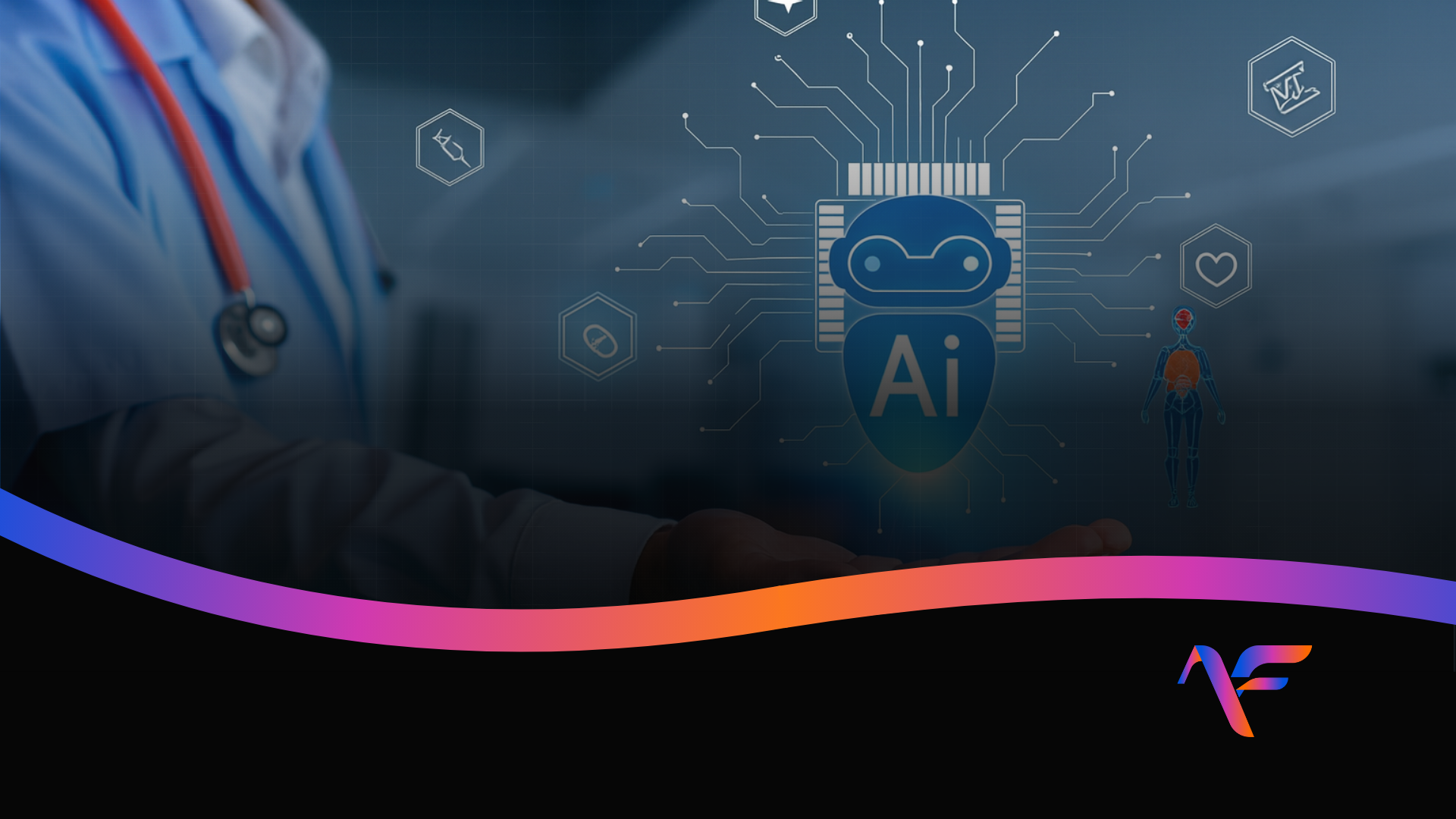
A multi-location healthcare clinic group operating across several cities, offering both family medicine and dental services. With thousands of active patients and a steady flow of new inquiries each week, the clinics experienced constant demand across phone lines and web inquiries.
Front-desk teams were stretched thin, managing ringing phones, walk-ins, reschedule requests, and insurance questions all at once. Mondays were particularly difficult, with weekend voicemails piling up and leaving patients waiting for responses. The leadership team knew these inefficiencies were costing the organization: patients were being lost to competitors with quicker service, staff were burning out, and manual processes made compliance harder to enforce. They needed a modern solution that could balance patient expectations with operational efficiency, without adding significant headcount.
Patients calling for appointments often had to wait on hold for over a minute before speaking with a receptionist. During peak periods, this wait time grew even longer, leading many patients to abandon calls entirely. Missed opportunities for bookings not only hurt patient satisfaction but also affected clinic revenue and reputation in competitive markets.
The clinics relied heavily on voicemail systems to capture patient calls outside regular working hours. Unfortunately, this meant many patients didn’t receive a timely response, leading to frustration and rescheduling delays. By Monday morning, staff were overwhelmed by backlogged messages and requests, creating stress and inefficiency at the start of each week.
Receptionists entered information into the practice system manually, which often introduced errors and inconsistencies. Some staff skipped intake questions under pressure, while others captured too much or too little detail. These inconsistencies created operational headaches: doctors lacked reliable information before appointments, and follow-up work multiplied as staff clarified missing details.
As a healthcare provider, compliance with privacy and data protection laws was non-negotiable. However, manual transcription and recording processes introduced risks. Sensitive details weren’t always properly redacted, and escalation protocols for sensitive cases weren’t consistent. The leadership team needed a solution that provided peace of mind by meeting compliance requirements while still delivering speed and convenience for patients.
Answer and understand – The AI receptionist greeted patients instantly, ensuring calls were answered in seconds, not minutes. By identifying the reason for the call immediately, the system reduced friction and guided patients down the right path without long menus or human delays.
Verify and act – Using simple verification steps such as confirming date of birth or contact number, the system ensured security while pulling up relevant patient data. This eliminated the need for staff to look through records manually and reduced the risk of human error.
Book and confirm – The AI allowed patients to book, reschedule, or join waitlists in real time. Automated confirmations and reminders were sent immediately after each interaction, drastically reducing the chance of patients forgetting or missing their appointments.
Route exceptions – Not all cases could be handled by AI, such as insurance disputes or sensitive medical concerns. The system intelligently flagged these calls and routed them to staff, providing full context so patients didn’t need to repeat themselves. This created smoother handoffs and more satisfied patients.
Guardrails – To maintain compliance, sensitive data was automatically masked in transcripts, and stored information was redacted where required. Role-based access ensured only authorized staff could see sensitive details, while all escalation protocols were hard-coded into the system to ensure safe handoffs every time.
Notes and tracking – Every patient interaction generated structured notes automatically stored in the practice system. This not only eliminated duplicate work but also standardized documentation across the organization. Clinicians and staff had clean, consistent records at their fingertips.
KPI quality check – The system included a weekly quality audit that tested calls against specific rules: Was the greeting clear? Was the patient verified? Was the resolution handled properly? Any issues were flagged for improvement, while successful performance was reported to management, ensuring continuous system refinement.
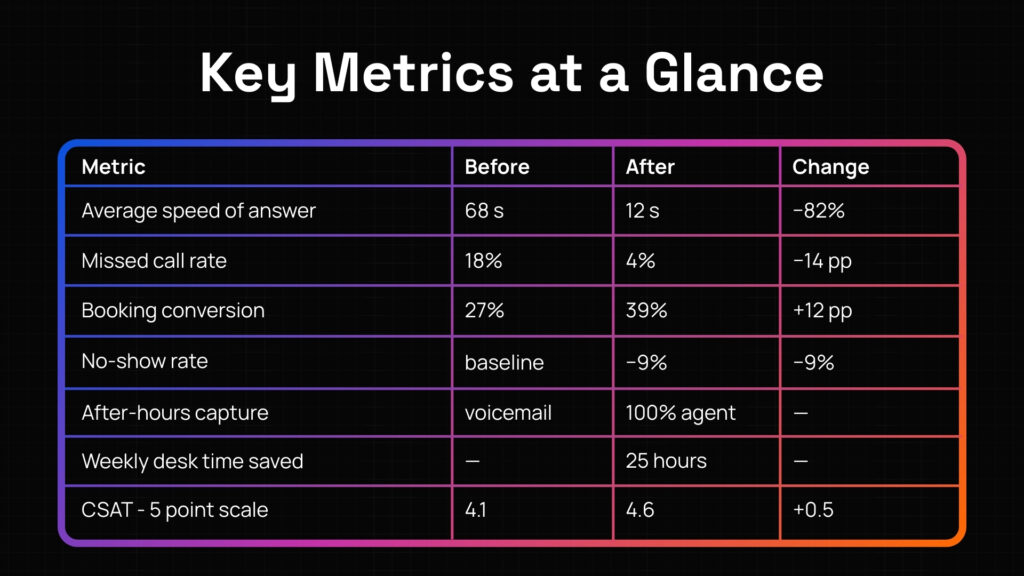
The rollout of the AI receptionist had a measurable impact on both patients and staff:
Average speed of answer dropped from 68 seconds to 12 seconds (−82%), giving patients near-instant access to assistance.
Missed call rate fell dramatically from 18% to 4% (−14 percentage points), ensuring more patients received the support they needed.
After-hours capture shifted from voicemail reliance to 100% answered by agent, with smart callbacks scheduled where human assistance was required.
Booking conversion increased from 27% to 39% (+12 pp) as patients reached the correct resolution faster, without dropped calls or delays.
No-show rate decreased by 9% due to timely reminders, reducing wasted appointment slots.
25 staff hours saved weekly, freeing up receptionists to focus on walk-ins, complex inquiries, and in-office patient care rather than repetitive admin tasks.
Customer satisfaction scores improved from 4.1 to 4.6 out of 5 within just 60 days, showing the dual benefit of efficiency and better patient experience.
By combining intelligent AI reception with Autofuse’s quality guardrails, this clinic group streamlined scheduling, boosted patient satisfaction, and unlocked new efficiencies across its locations.
Not every process needs AI. We help you find where it delivers the most impact — and fuse it seamlessly into your workflows.
Copyright © 2025 All Rights Reserved.
Project by Adler One
